Cats & the Craft
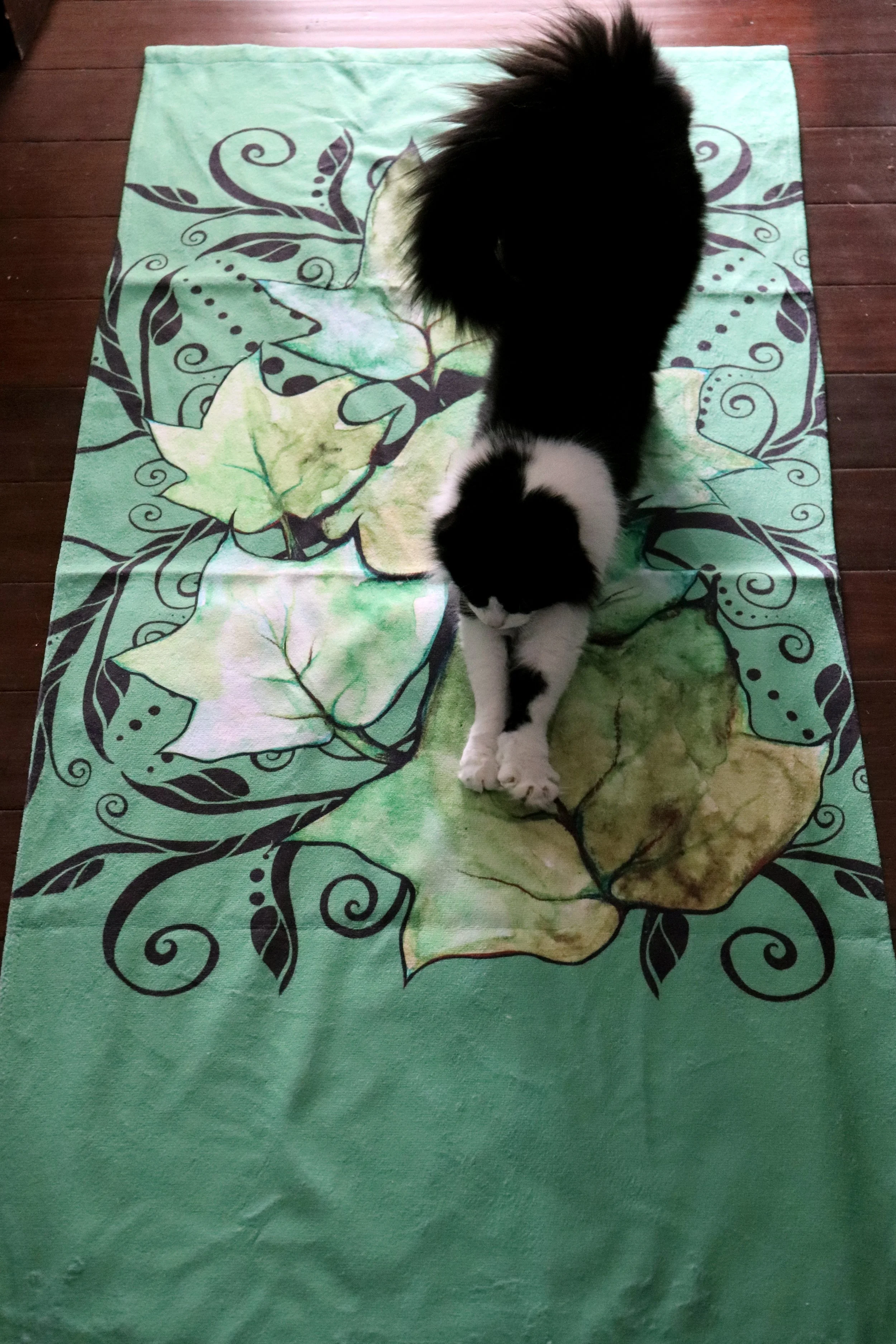
From ancient goddess temples to the modern witch's hearth — cats have always known something we're still catching up to.
If you share your home with a cat, you already know the feeling. The way they stare at empty corners. The way they show up exactly when you need comfort without being called. The way they move through the world with an air of knowing something you don't. Cats have been woven into the spiritual lives of humans for thousands of years, and for good reason. They are creatures of mystery, independence, and magic — and the history of their relationship with witchcraft, paganism, and the divine feminine is far richer and stranger than most people realize.
In the Beginning: Cats as Sacred Animals
The story starts in ancient Egypt, where the domestic cat was not merely tolerated or appreciated — it was worshipped. The goddess Bastet, one of the most beloved deities in the Egyptian pantheon, was depicted as a cat or as a woman with the head of a cat. She was the goddess of home, fertility, protection, music, and joy. Cats were kept in her temples, mummified in her honor, and protected by law — killing a cat in ancient Egypt, even accidentally, was punishable by death.
Bastet's counterpart was Sekhmet, the lion-headed goddess of war and destruction — a fiercer face of the same feline divine energy. Together they represented the full spectrum of cat nature: the warm, purring creature on your lap and the apex predator who could remove your hand if you reached for it wrong.
The Egyptians believed cats could see into the spirit world. Their eyes — which dilate and contract in ways that seemed to ancient observers like they were responding to invisible presences — were thought to reflect the light of the sun even in darkness, making them guardians against evil spirits. Cats were kept in homes not just as pest control, but as spiritual protectors.
🐱 The Black Cat & Roses print captures that timeless energy — mysterious, beautiful, a little otherworldly.
Norse Mythology: Freya's Cats
Move north and west, and the feline magic continues. In Norse mythology, the goddess Freya — goddess of love, fertility, magic, and war — rode a chariot pulled by two large cats, often depicted as grey or blue. These weren't pets; they were her companions and her power. Freya was the mistress of seiðr, the Norse shamanic tradition of magic and prophecy, and her cats were part of her magical identity.
Farmers who wanted Freya's blessing for a good harvest would leave out offerings for her cats. In some traditions, a bride who had good weather on her wedding day was said to have "fed the cat well" — a reference to keeping Freya's feline companions happy. The association between cats and this powerful, multifaceted goddess of magic cemented their place in Northern European spiritual life.
It's worth noting that Freya also received half of those slain in battle, choosing among the dead before Odin. She was not a soft goddess. Neither, ultimately, is the cat.
The Middle Ages: When Everything Went Wrong
For most of Western history, cats were respected and even revered. Then came the medieval period in Europe, and with it, one of the darkest chapters in the cat's long story.
As Christianity solidified its grip on European culture, older pagan traditions were systematically demonized. Animals associated with those traditions — including cats, particularly black cats — became associated with evil, the devil, and witchcraft. Pope Gregory IX's 1233 papal bull Vox in Rama explicitly associated black cats with Satanic worship, and the persecution that followed was catastrophic for cat populations across Europe.
Cats were killed in enormous numbers, associated with heresy and the occult. Ironically — and tragically — this had a practical consequence: with cat populations decimated, rat populations exploded. Some historians have suggested that the mass killing of cats contributed to the rapid spread of the Black Death in the 14th century, since rats carrying plague-infected fleas faced fewer natural predators.
The "witch's cat" or "familiar" emerged from this period as a specific accusation during witch trials. Accused witches were often said to keep animal familiars — spirits in animal form who assisted them in their magical work — and cats were the most commonly named. An elderly woman living alone with a cat became a figure of suspicion rather than simply a person who liked cats. The association was lethal for both women and animals.
🏠 The Black Cat Pumpkins Halloween house flag reclaims that imagery with joy and celebration — the witch's cat as icon, not accusation.
The Familiar: What It Actually Means
Stripped of its persecution-era baggage, the concept of the familiar is actually a beautiful one. In folk magic and modern pagan traditions, a familiar is an animal companion who shares a deep spiritual bond with a witch or magical practitioner — not a demon in disguise, but a genuine partner in the work.
Familiars are thought to be sensitive to energy in ways humans often aren't. They can sense shifts in a space, respond to emotional states, and in some traditions, assist in magical work simply by being present. If you've ever had a cat appear and sit directly on your altar, stare into the candle flame with you, or curl up in your lap precisely when you were doing shadow work and crying, you already have some data on this.
The relationship between a witch and their familiar is reciprocal — it's a bond of mutual recognition and care, not ownership or control. Many modern witches and pagans feel strongly that their cats chose them, not the other way around. If you've ever adopted a cat that seemed to pick you out specifically, you may find that framing resonant.
🌙 The Cat Witch Moon Goddess sticker is for everyone who knows their cat is a little bit magical — and so are they.
Black Cats: Reclaiming the Symbol
Of all cats, black cats carry the heaviest symbolic weight — and the most complicated history. They have been feared, killed, associated with bad luck and witchcraft in Western European tradition, and simultaneously revered in other cultures. In Japan and Scotland, a black cat crossing your path is considered good luck. Sailors valued black cats on ships as protectors against storms. In ancient Egypt, all cats — regardless of color — were sacred.
The bad luck superstition around black cats in the United States and much of Western Europe is a direct inheritance of medieval Christian persecution. It has no basis in the cats themselves, who are simply cats — equally capable of knocking your water glass off the table at 3am regardless of coat color.
In modern paganism and witchcraft, the black cat has been fully reclaimed as a symbol of magic, protection, mystery, and power. The black cat on a witch's shoulder is an image of partnership and pride, not fear.
🖤 The Black Cat & Roses sticker and the Spooky Black Cats sherpa blanket both celebrate that reclaimed energy — cozy, magical, unapologetically witchy.
Cats and the Moon
Cats are crepuscular and nocturnal creatures — most active at dawn, dusk, and through the night. Their eyes are built for low light. They hunt by moonlight. They have been associated with the moon, and with moon goddesses, across dozens of cultures and traditions.
The moon in witchcraft and paganism represents the divine feminine, cycles, intuition, mystery, and magic. The lunar cycle governs much of pagan practice — new moon intentions, full moon rituals, waning moon release work. A cat, moving through the moonlit night with perfect confidence and supernatural grace, is a natural symbol for all of that.
In Greco-Roman tradition, the goddess Hecate — goddess of witchcraft, crossroads, and the moon — was associated with cats and often depicted accompanied by them. Diana, the Roman moon goddess, could transform into a cat. The connection between cats, the moon, and magical feminine power is ancient and cross-cultural.
🌕 The Moon Goddess Cat Witch car magnet and the Moon Witch Moonchild trivet bring that lunar cat energy into your everyday world.
Cats in Modern Witchcraft and Paganism
Today, cats are arguably the unofficial mascot of modern witchcraft — and for good reason. The contemporary pagan and witchcraft communities are full of cat people. Social media is overrun with altars featuring cats who have knocked over the candles, bookshelves of grimoires with cats wedged between them, and tarot readings interrupted by a fluffy paw.
Part of this is simple affinity — people drawn to independent, intuitive, boundary-aware spiritual practices tend to be drawn to independent, intuitive, boundary-aware animals. Cats don't perform for you. They don't love you because you feed them (or not only because of that). They choose you, and that choice means something.
But part of it is also a genuine spiritual resonance. Cats model something that witchcraft asks of its practitioners: presence, stillness, acute sensitivity to their environment, comfort with darkness, and a refusal to be domesticated all the way down. A cat in meditation is not performing stillness — it simply is still, fully inhabiting the moment. There's a teaching in that.
📬 Send some cat magic through the mail with the Orange Tabby Garden postcard, the Kitty Cat Purple Daisies postcard, or the Sorry Calico Kitten postcard.
Every Cat Is Its Own Magic
Tabby or tuxedo, calico or solid black, Maine Coon or moggy — every cat carries its own particular energy. Calicos are famously associated with good luck across many cultures. Tuxedo cats have an air of dignified mystery. Gingers are bold and solar. Tortoiseshells — tortoiseshells just do whatever they want, which is the most magical trait of all.
🐱 Celebrate your own cat's magic with stickers made for every coat: Calico cat stickers, Tuxie cat sticker, Texas Cats sticker, and the Bookish Cat sticker for the witch whose familiar prefers to be near the library.
And for the home that runs on cat energy from floor to ceiling — the Kitty Cats Everywhere throw pillow, White Clouds Cat wrapping paper, and Sunflowers Ginger Maine Coon water bottle are made for you.
A Note on Cat Witch Invitations
Planning a gathering of fellow cat witches? A Samhain party, a coven dinner, a full moon celebration? The Cat Witch Moon Goddess invitation sets exactly the right tone — witchy, warm, and cat-forward.
The Cats Know
Whatever you believe about magic, familiars, and the spirit world — it's hard to spend time with a cat and not feel that they are operating on a frequency slightly different from the rest of us. They see things we don't. They respond to energies we can't measure. They offer comfort with an instinct that goes beyond conditioning or training.
Maybe that's why humans have been calling them sacred for five thousand years. Maybe that's why the witch and the cat found each other, and keep finding each other, century after century.
Your cat already knows all of this. They've just been waiting for you to catch up.
🐾 Explore the full cat art collection — watercolors, prints, and goods for the cat person who is probably also a little bit of a witch.